Website · Cleaning and maintenance
Headless website for cleaning and maintenance services
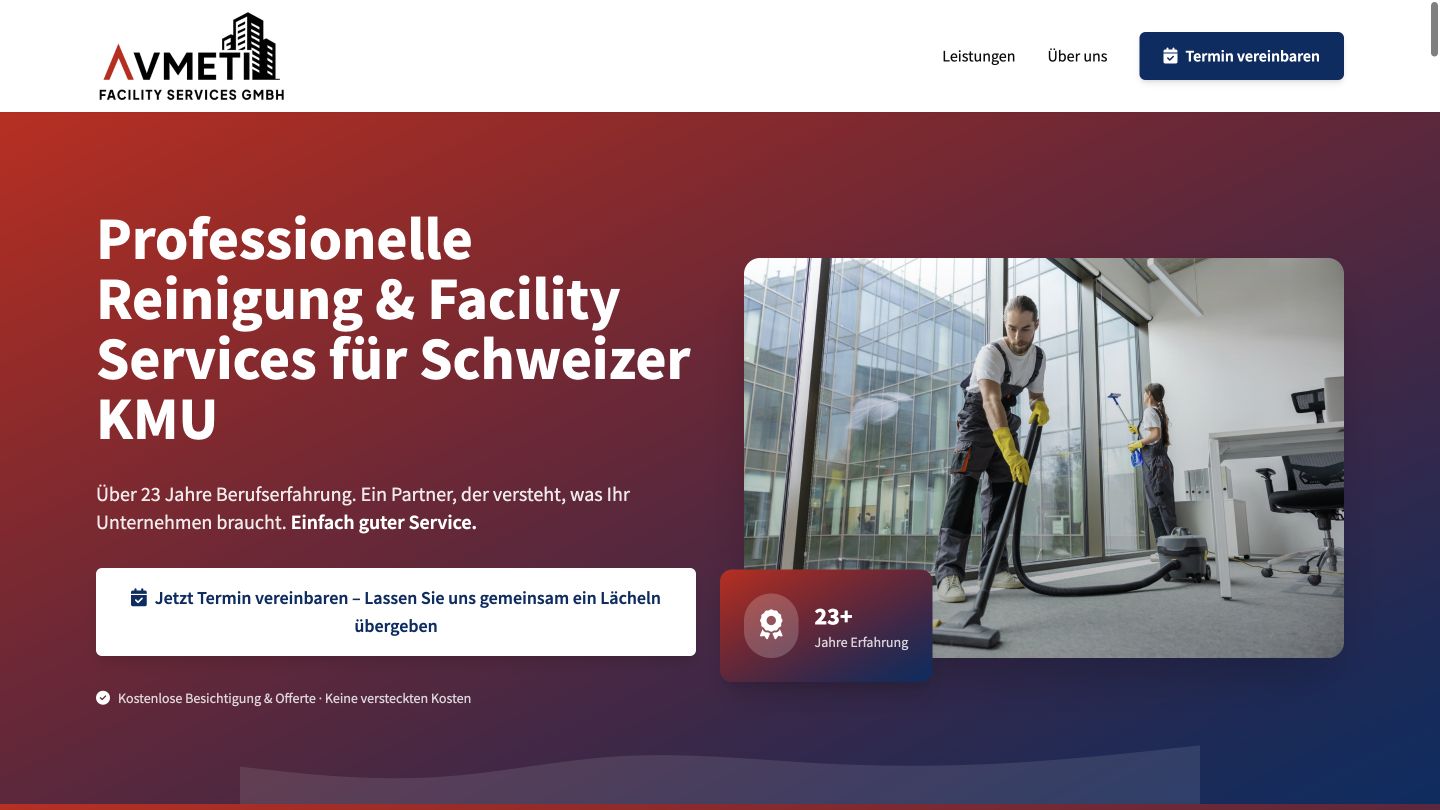
A corporate website built with a headless architecture to present services, capture enquiries, and manage content independently from the frontend.
Challenge
A cleaning and maintenance services company needed to present a broad offering clearly, explain how it works, and turn website visits into enquiries.
Content had to be updated without depending directly on frontend code. The solution also needed to provide a consistent experience across devices and a flexible foundation for future expansion.
Alongside standard search requirements, the structure had to follow GEO guidelines. This meant organising information so that services, use cases, and business answers could be interpreted clearly by generative search systems.
Solution
My responsibility focused on frontend development and the integration of Orbitype as a headless CMS. The presentation layer was implemented with Nuxt, Vue, React, and Tailwind CSS, keeping content management separate from the visitor-facing interface.
During development, I used Figma MCP to inspect the visual reference and guide the responsive implementation. This workflow helped translate the design into consistent components while preserving hierarchy, spacing, and behaviour across sections.
I also helped apply SEO and GEO guidelines. The information was structured to explain directly which services are offered, when they are relevant, and how a visitor can start an enquiry.
This case focuses on my technical and editorial contribution. It does not attribute the brand identity, service operations, or deliverables produced by the wider team to my individual work.
Outcome
The result was a published corporate website with navigation, service pages, commercial messaging, calls to action, and an enquiry flow.
The decoupled architecture allows content to be managed from the CMS without changing the frontend application for every update. The implementation also established a component foundation that makes the site easier to maintain and extend.
The project brings together frontend development, headless integration, Figma-guided implementation, and GEO criteria in a real production environment. No verified traffic, conversion, ranking, or generative-search metrics are available, so these are not presented as confirmed outcomes.